

World Book Day 2009
 
HomeRegisterNews & EventsFAQs

Information for Booksellers

Guide to organising and publicising your event for World Book Day 2010

If you would like your event listed on the WorldBookDay web page please submit details of the event to worldbookdayireland@gmail.com


World Book Day, Ireland’s largest reading event, will take place on Thursday 4th March 2010.

If you are thinking of holding a book event, please note that it can take place anytime during the month of March. So if you haven’t yet thought about organising something, then read on for some tips to help you get started.

Hundreds of book events will take place up and down the country to celebrate World Book Day. Log onto www.worldbookday.com for details as they are updated.

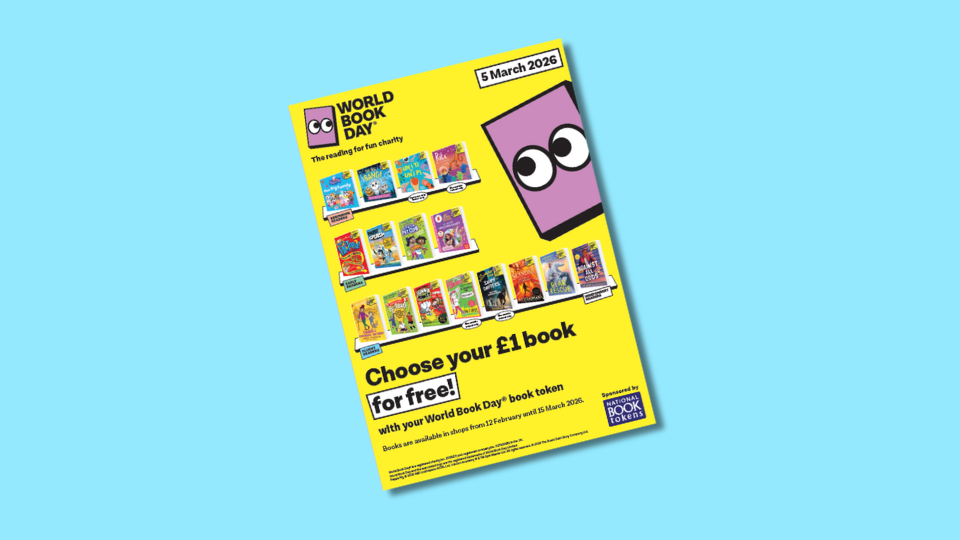
Brand new for children are World Book Day 2010 €1.50 Books flipbooks which combine two books by two different authors in one book, offering more stories for each child to enjoy when they redeem their free World Book Day €1.50 Book Token. There are six flip books, suitable for all ages, including an Irish language book, as well as one stand-alone picture book for early years.

For the fifth year running, a new series of ten Quick Reads will be published on World Book Day, which this year includes non-fiction titles. This innovative and popular range of short and accessible books is aimed at the hundreds of thousands of people who just don’t have time to read or who struggle to finish a book.

EVENT IDEAS

You might prefer to hold an adult reading or children’s event or both.

Some of the more popular ideas include:

  • Invite an author to do a reading in your shop 
  • Organise a special book club for World Book Day
  • Make a special window display – have someone reading in the window for World Book Day
  • Link up with your local branch of NALA (National Adult Literacy Agency), VEC or local adult literacy group to run a Quick Reads exploration of reading 
  • Discuss one of the Quick Reads books in your book club

Children’s events might include:

  • Invite a school class to the shop and organise a reading 
  • Invite an author to read to a local school class 
  • Fill your window with books and ask the public to guess how many there are
  • Activity Hours: Children can draw pictures of their favourite characters from favourite books , write reviews of the last book that they read, design book covers etc. Perhaps these could be displayed in an area in the shop for the month of March 
  • Have a special family day with face painters, clowns and other entertainment in-store.
  • Arrange a competition with the local paper or radio station, where you will provide the prize, e.g. a colouring competition or design a bookmark competition for primary school children, a short story competition for older children

OBTAINING QUICK READS PROMOTIONAL MATERIAL – ORDER BY FEB

Quick Reads promotional material is available from NIACE – the UK body for promoting adult reading. Posters, bookmarks, mugs, pens and learning materials are available to order online as well as several fact sheets with ideas on how to hold a Quick Reads event with examples of how learning providers have used Quick Reads.

Click 'Quick Reads’ on the World Book Day website www.worldbookday.com or log onto www.quickreads.org.uk and click the ‘Register’ button to order promotional material for your event. Please order your material by February 19th at the very latest to allow for delivery

Any other enquiries about Quick Reads material can be sent to quickreads@niace.org.uk


PUBLICISING YOUR EVENT

Many of you will already be involved in your local communities and will know someone in local NEWSPAPER or RADIO station and have a relationship with them. Some of you won’t. It makes no difference. For the purpose of World Book Day, here are some hints on getting the coverage that you are looking for your event.

Make the journalist’s life as easy as possible and help get your story covered;

WHAT A JOURNALIST WANTS

  • Local interest stories which will increase readership/listenership
  • Clear concise releases – no waffle
  • An appreciation of deadlines - find out when they need the information.
  • Contact details for further information and date of issue
  • An easy life

THE DATE AND TIME OF DAY OF YOUR EVENT

  • If you are organising an event, then it must be held at a time of the day which suits the press, otherwise there will be a poor turn-out and little coverage. 

There are two rules for the choice of date and time:

  1. Try to avoid clashing with some other major event or press function.
  2. Try to choose a day which satisfies copy date needs. Day of the week is important because the most local newspapers will go to print on a Monday/ Tuesday. If you can get your stories to them on a Thursday/Friday then you have a much better chance of getting printed.


PHOTOGRAPHS AND CAPTIONS

Editors want pictures that enhance the page and flatter their ability to please the readers. They also want pictures that reproduce well according to the printing process and paper they use.

A public relations picture should convey a message, not be a mere record. It should not be a blatant advertising message and product or company names – if shown at all – should be discreet.

All photos should be sent out with captions. Ideally photos should be emailed in a high resolution format with an attached caption, with details including, name, address, age (if appropriate) and the event itself. Don’t forget to mention that it is for World Book Day.

WRITING NEWS STORIES AND PRESS RELEASES

All public relations materials should be of interest and value to the reader. The easiest way to learn how to write a news release is to read the news columns of a newspaper - the 5 ‘W’s.

WHO, WHAT, WHEN, WHERE AND WHY

  • Who is the story about
  • What happened 
  • When did it happen
  • Where did it happen
  • Why did it happen
  • (What were the consequences?)

GUIDELINES

  • Focus on the key element. 
  • Work out carefully the first sentence/paragraph. 
  • Assemble your material so that it descends naturally from the “intro”, with the most important or newsworthy information first and then the rest in descending order of importance below

THE INVERTED PYRAMID

  • Puts all the key facts first and then gradually tapers down into a descending order of additional explanatory sentences and background information
  • It saves journalists from a lot of rewriting, with the last paragraphs lopped off easily without losing the key elements of the story.

HEADLINES - THEIR IMPORTANCE

  • Indicate the essence of the copy under the headline
  • Attract interest of potential reader
  • Short, evocative words are used
  • Almost always contain a verb in the present, active tense
  • There is usually a subject

IMPROVING YOUR CHANCES OF PUBLICATION

  • Issue stories of genuine interest to a media’s readership/listenership
  • Send to relevant journalists only 
  • Keep your press release to one page (if possible)
  • Accompanying photos should take account of local media style and content and include a relevant local angle
  • Respect deadlines
  • Include contact name and telephone number
  • Follow-up with telephone call to see if they need more information


NO MATTER WHAT YOUR EVENT FOR WORLD BOOK DAY – REMEMBER THESE KEY MEDIA MESSAGES!

  • World Book Day 2010 marks 13 years of promoting reading in Ireland 
  • It is a 100% Irish run event by The Irish Booksellers Association
  • It is a month long promotion between March 1st and March 28th which also includes Quick Reads and Library Ireland Week 
  • There is a free €1.50 book voucher to every school child in Ireland 
  • The free voucher is a gift from booksellers all over the country 


National Book Tokens The Publishers Association
Website and contents copyright © World Book Day 2010 | World Book Day illustrations copyright Joe Berger World Book Day Ltd is registered charity number: 1079257
Join our mailing list      Downloads      Events RSS feed      News RSS feed web design london : pedalo limited