



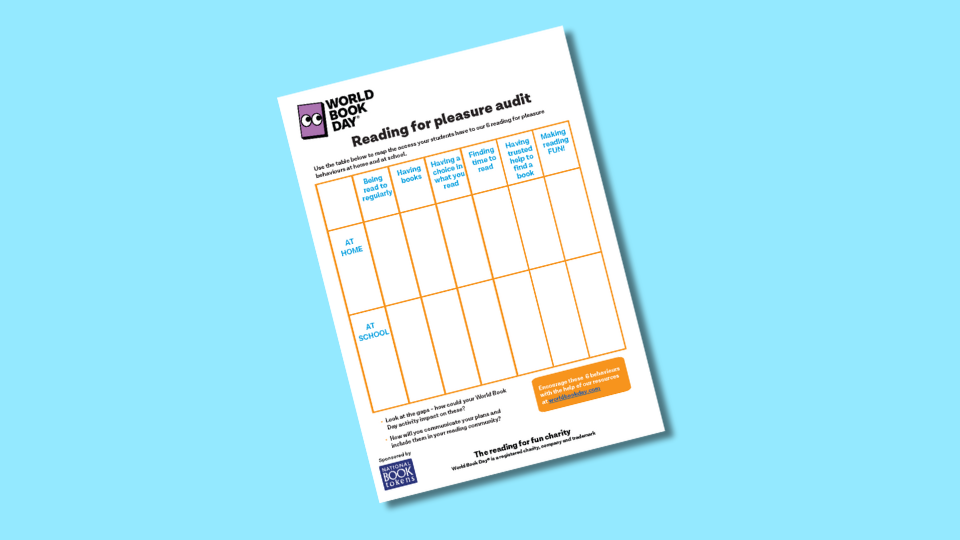
Discover how much access pupils have to reading for fun and identify ways to inspire them. This activity helps you see what’s happening both at home and in school, so you can then plan meaningful ways to make reading part of every day.
Why it works
Understanding pupils’ access to reading helps you plan meaningful support. As a result, you can turn your observations into insight and give every child the opportunity to read for fun.
Get started
Use the audit to explore the six key reading behaviours:
- Being read to regularly
- Having books available
- Choosing what they read
- Finding time to read
- Getting trusted help to find a book
- Making reading enjoyable
Record what’s already working and where you need to offer more support. Talk to pupils to understand what helps or gets in the way of their reading.
Spot the gaps
Next, look for any missing opportunities or patterns. For example, are pupils choosing what they read at home, or only at school?
Think about small, practical ways to make reading visible and social, such as daily reading time, shared stories, or book swaps. Next, choose the World Book Day activity that best fills those gaps.
Plan next steps
Share your plan with pupils, parents, or colleagues so everyone feels part of your reading community. Finally, use what you’ve learned to shape classroom activities or whole-school plans, and ask yourself:
- Which World Book Day activities could fill these gaps?
- How can pupils help design your reading community?
Download the Reading for Pleasure Audit and start planning playful, inclusive reading activities.
Use of World Book Day resources
These resources are free to use for schools, early years settings, libraries, charities, and community groups celebrating World Book Day. Commercial organisations must have a partnership or licence agreement in place before using World Book Day assets. If you are interested in working with us, please contact partnerships@worldbookday.com.