



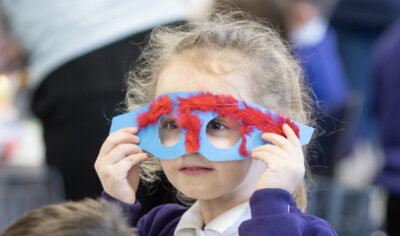
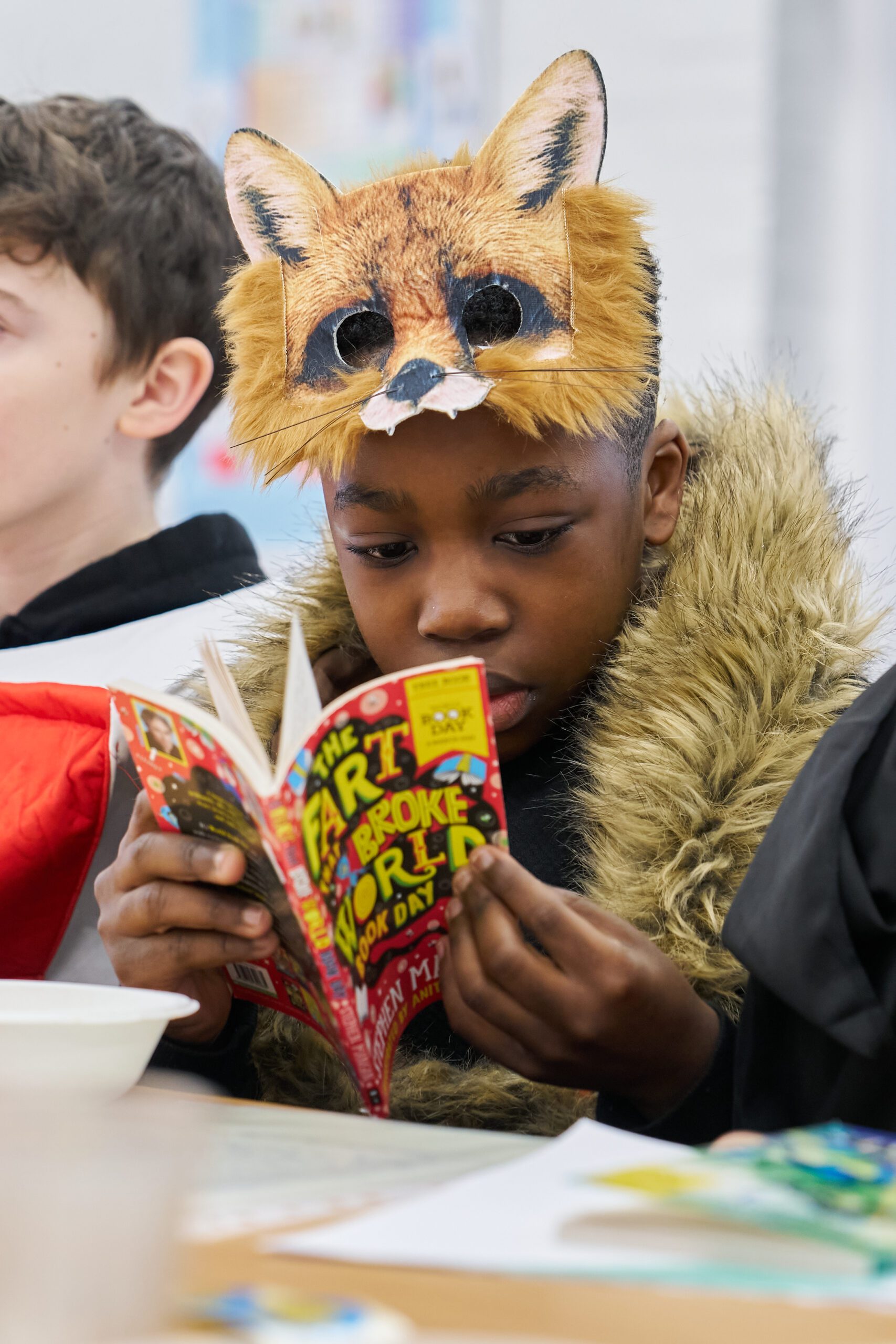
Dressing-up can help children talk about books, share ideas and celebrate what they enjoy reading. When it focuses on choice rather than costumes, dressing-up can support reading for fun in simple and inclusive ways.
This page shares practical ideas for using dressing-up to encourage reading. All activities work with or without costumes.
Why dressing-up can support reading for fun
Dressing-up works best when it helps children:
- talk about books they have chosen themselves
- recommend stories to friends
- feel confident sharing ideas
- see reading as social and enjoyable
Costumes are not the goal. Enjoying books is what matters.
Keep it inclusive
Not every child enjoys dressing-up. Some children feel uncomfortable or unsure. You can support everyone by:
- celebrating the book choice, not the costume
- offering simple options using everyday clothes or small props
- including non-fiction ideas such as facts, subjects or authors
- focusing on comfort, including pyjamas or normal clothes
- making dressing-up optional
When children feel relaxed, they are more likely to enjoy reading.
Practical classroom ideas
These activities use dressing-up to start conversations about books.
Hot seating
Set up a chair. Children answer questions in character or as the author or subject of a non-fiction book.
Human library
Children share short book talks in pairs or small groups, then swap. This helps them hear about many books.
Talking statues
Children pose as a character, fact or figure from a book. Tap them on the shoulder to explain who they are.
Book party
Create a party space with music. Children meet others and share book choices. Pause the activity to talk about what is happening.
Support non-fiction readers
Dressing-up does not have to mean fiction. Children who enjoy non-fiction could:
- dress as an expert or historical figure
- bring a prop linked to a fact or subject
- wear a badge or label showing an interest
This helps all readers feel included.
Make it part of everyday reading
Some schools keep a simple dressing-up rail with hats or props for regular use. Others choose pyjama reading days or book sharing activities. Both approaches help keep the focus on reading habits rather than costumes.
Related resources
- Low-cost dressing-up ideas for World Book Day
- Dressing-up ideas for educators
- Dressing-up ideas for parents and carers
- Class costume workshop
- Social reading activities that do not need costumes
Use of World Book Day resources
These resources are free to use for schools, early years settings, libraries, charities, and community groups celebrating World Book Day. Commercial organisations must have a partnership or licence agreement in place before using World Book Day assets. If you are interested in working with us, please contact [email protected].